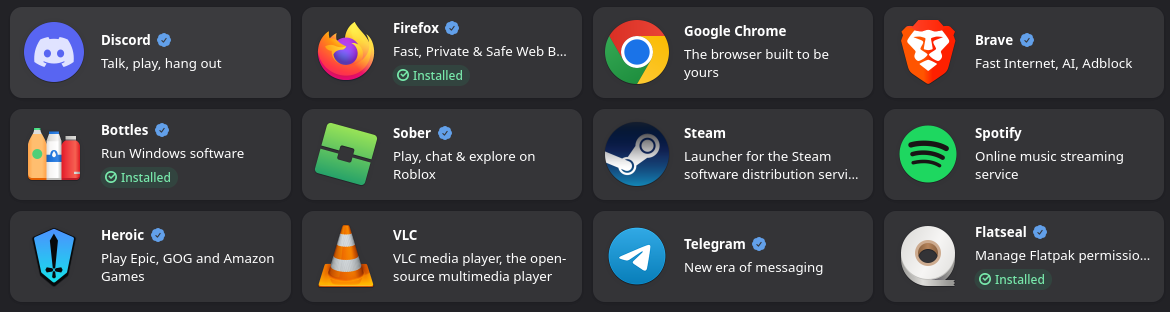
As Linux becomes more approachable to more casual computer users, one of the interesting things to observe is the state of software stores on Linux. This is becoming especially important with the rise of containerized software such as flatpak and snap. Today. a user can easily have a system that potentially has a mix of distro repos, 3rd party repos, snap and flatpak. The need to make managing that complexity for the user easier is becoming more important.
I have used a whole bunch of them and the TLDR version is, the situation is much better than it was a few years ago but still a bit of a mess. There are pretty broad differences in features and some have adapted to containerized formats better than others. Discover and Gnome Software seem to the be the most functional, but they definitely aren’t the most usable. On the other hand, Bazaar is highly usable but very limited in what it supports.
For anyone who wants to see my thoughts on each, you can read that below. Keep in mind that my thoughts on discoverability are highly subjective. Mostly I am rating their ability to recommend relevant applications when looking in a category and make them easy to find.
Bazaar
Supports: Flatpaks only
Pros:
Is probably the easiest store to browse and discover applications
Has a Curated section that allows distros to highlight the packages that may be interesting to their user base
Clearly shows the difference between verified and non-verified flatpaks
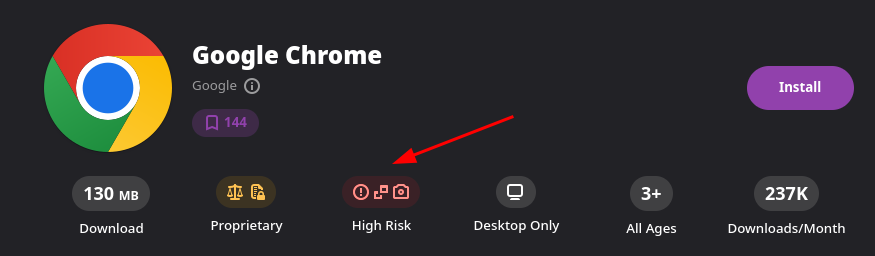
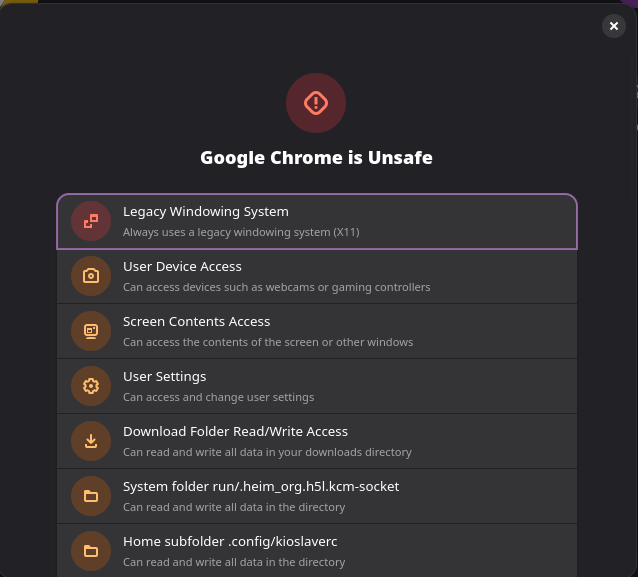
Warns when installing flatpaks it considers to be risky i.e. Chrome
Offers to remove user config when removing flatpaks
Shows flatpak permissions and an overall rating
Cons:
Only supports flatpak
COSMIC Store
Supports: Flatpak, deb packages, COSMIC applets
Pros:
Easy to browse and discover software
Offers to remove user config when removing flatpaks
Cons:
Doesn’t show the difference between verified flatpaks and those that are not
Doesn’t show flatpak permissions
Elementary OS AppCenter
Supports: Flatpak
Cons:
It is monetized
Doesn’t show flatpak permissions
Doesn’t offer to remove user config when removing flatpaks
Discoverability is not ideal
Doesn’t differentiate between verified and unverified flatpaks
Only supports flatpaks
Discover
Supports: Flatpak, Snap, firmware updates, KDE add-ons and anything supported by PackageKit
Pros:
Supports almost all package formats
Differentiates between verified flatpaks clearly and with hover support to explain the difference
Differentiates between verified snaps with a check and those from starred publishers with a star
Supports offline updates
Clearly shows the source of all software and allows you to choose between multiple sources
When viewing an uninstalled flatpak, flags that user config is still installed and recommends to remove it
Shows flatpak permissions and allows you to change the permissions
Cons:
Discoverability is not ideal, you can browse through the categories but it isn’t as easy as with Bazaar or the COSMIC Store
Usability could be improved, there are a lot of small oddities
When browsing, applications from multiple sources aren’t collapsed even though when you click on one of them, it shows you all the available stores
Gnome Software
Supports: Flatpak, Snap, firmware updates and anything supported by PackageKit
Pros:
Supports almost all package formats
Shows verified flatpaks clearly
Shows verified snaps clearly
Supports offline updates
Clearly shows the source of all software and allows you to choose between multiple sources
Offers to remove user config when removing flatpaks
Shows flatpak permissions and an overall rating
Cons:
Discoverability is pretty bad since software is in broad categories and alphabetized, you more or less need to already know what you want to find anything
Linux Mint Software Manager
Supports: Flatpaks and deb packages
Pros:
Hides unverified flatpaks by default
Differentiates between verified flatpaks clearly, shows unverified with a red shield
Cons:
Discoverability is rough, probably the worst on this list
Doesn’t show flatpak permissions
Doesn’t offer to remove user config when removing flatpaks
Showing installed applications does not show all the installed applications
Only supports installing and removing, updates are in a separate application
Ubuntu App Center
Supports: Snap
Pros:
Differentiates between verified snaps with a green check and those from starred publishers with an orange star
Neutral:
Discoverability is average it is better than Discover but inferior to most of the other offerings here
Cons:
It only supports snap which is especially odd since Ubuntu is built off deb packages
NOTE: In case you are wondering why your favorite tool isn’t here, please keep in mind that I am not including package mangers. So tools like octopi, pamac, synaptic, dnf dragora and friends aren’t considered.
philosophically speaking, would you categorize these stores as ‘curated’ or ‘secure’ as an individual Distro’s store? /extra, for instance? Or am I wrong to think of stores in the same way as a dedicated distros?
Also: the more stores, in my reckoning, the larger (blackhat) attack vector.
Further, I think all these satellite stores will have more value when Immutable becomes a Bigger Thing. Not saying I would trust them. But there ya go.
Yeah, for there is definitely some blurriness there. Especially since the “Stores” install so many different things. In the case of repo packages, it is the packages, the package manager and the appstream data. In the case of flatpak/snap, it is all coming from a the backend which provides the package and the metadata. The same is true for things like COSMIC applets and KDE addons.
Even the difference between a software store and gui front-end for a package manager is pretty subjective. I am sure some would argue that pamac is a software store since it includes appstream data and iconography but, to me, it still feels like a package manager since it lists out all the packages.
You’re almost making me want to try KDE discover again. It always seems really slow to me though especially when searching for updates. That might have been Fedora’s fault though.
oh you were just talking about middleman stuff like gnome-software or discover which are buggy as snot.
this is the kind of stuff, between two forums, I hear a LOT of ‘cant’ install right’ threads, and ‘screws up firmware’ threads, ‘botches x’ threads. it’s nice to have library to read about stuff but I don’t let them install anything
this was me once upon a time and I took it upon myself, as a novice, to familiarize myself with package managers, their commands, arguments, and how they worked and local repos.
Are you saying the newbie world is running out of initiative like this?
Well, yes, as Linux slowly becomes more mainstream, I think that is inevitable.
But it is more than that, package management itself is changing. Especially on immutable distros where normal package managers are often not used at all.
Solus deactivated its own (one of the better ones imo) Software Center and threw these duties over to software and discover. They claim it is too much upkeep.
You are correct: it’s the current trend and sign of the (linux) times
While there are a lot of reasons, I think this is the biggest one. We all have different interests. Some people find technology interesting and want to learn and others see it is as a tool to do a job and nothing else. There is nothing wrong with either of those things in my mind.
But also, the software itself is changing. While software stores/GUI package managers were once only about trying to make the package manger easier to use, these days things are different. We have lots of different sources for software and trust levels vary between sources.
The stores really have utility beyond ease of use. For example, when I looking at a package from a centralized store, I also want to know who packaged in it and if they are trusted. What permissions the application is allowing.
Now I can see all the risks and decide for myself how much I care.
The next thing that a store can do that is difficult from a package manager is discoverability. For example, I want a find an image editor but I don’t know what is available. How do I find that without doing a bunch of web searches or asking AI.
Lastly, I have found that when using a store, I find useful tools that I didn’t know even know existed.
I agree, but I have to also laugh because your points are all about information in one place. Always a good thing.
I am somewhere between (depends on the moment) daunted at ‘easy’ linux vs ‘finally, it’s becoming accessible’.
Every cell or genome in my DNA tells my that to accept mediocrity, even encourage it, is akin to courting disaster. But it just sounds like ‘get off my lawn’ etc..
Yes but that generation all started in their journey with more initiative to reject mediocrity…though we all love the low-hanging fruit on occasion..
So you are right: a generational difference perhaps.
If someone offered to make my life easier at any time on my timeline I probably would have appreciated it.
I was disappointed to hear about the switch, especially when a revamp of their Software Center had been on the to-do list of goals for quite some time.
oh God they even had a name for it (I forgot) and Beatrice, an ex-Dev, had been working on it a long time. You think with Ikey’s moss package innovation, they’d at least get a dedicated (homemade) GUI for it.
It took me about 15-20 minutes to rip every last K-package off of my X11 Budgie. It was grotesque and a decision I did not like but at least I had the choice to remove it. The thing about what you are saying about these ‘stores’: it’s a great place to read about app/product but that’s it for me: read. good god I would never use those contraptions to install/remove/update. Stores are generally inept at this, or hit and miss sometimes..