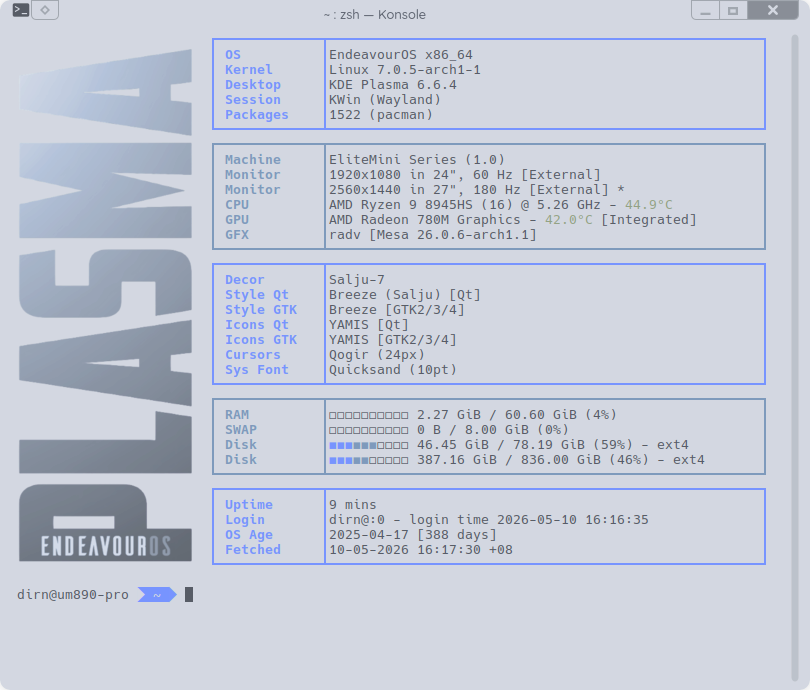
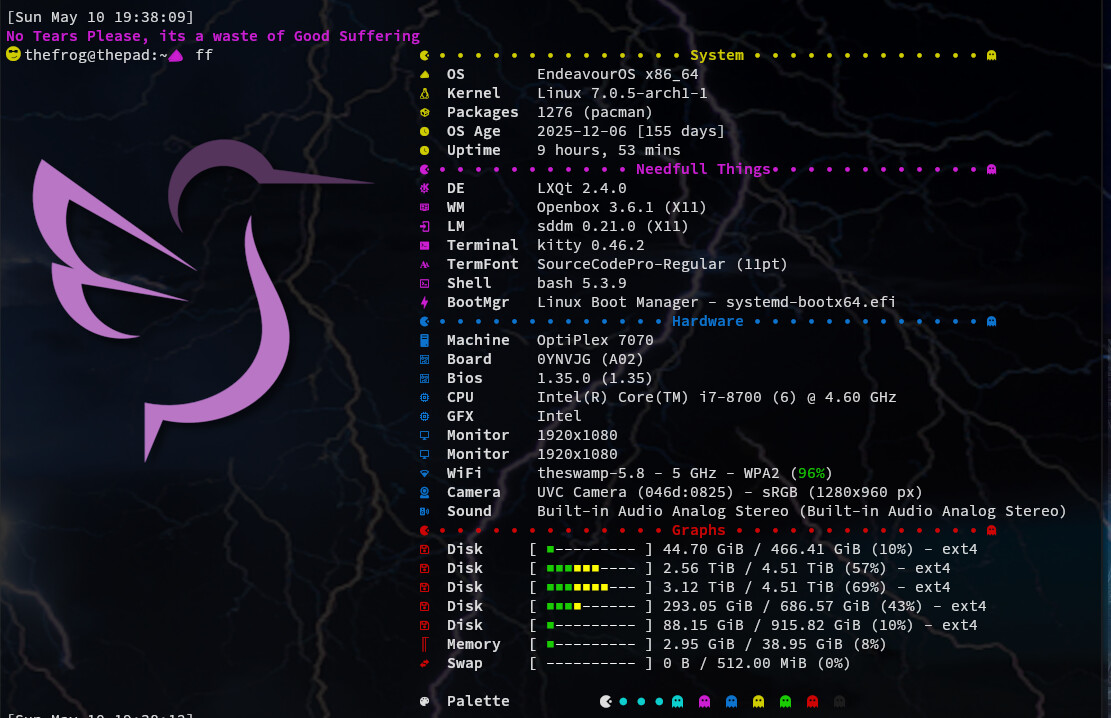
I just realized that I’ve been using EndeavourOS exclusively on my MiniPC for over a year now—no more dual-booting for me!
I originally migrated from Manjaro back in September 2024. At that time, I was still dual-booting with Windows on my old Acer Predator Helios 300 (which sadly passed away in May 2025).
I joined the forum on April 23, 2025. As a non-native English speaker, I’m mostly a silent reader, only chiming in when I feel I can contribute something meaningful. I’ve learned so much from this community—too many names to mention! One of my biggest takeaways was finally gaining a solid understanding of SVG images.
I want to take this opportunity to say a huge thank you to the EndeavourOS team for such a fantastic distro. It has been the perfect gateway for me to enjoy Arch from a beginner’s perspective. It’s been a great and fun journey!
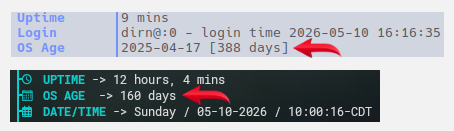
Congrats. I’m at 400 days with my current installation. I messed up the installation the year befor, out of ignorance. Thanks to the forum, I learned a lot, so I didn’t have to reinstall anything.
Congratulations @dirn! For my system it’s been 771 days since I first installed EndeavourOS. So far, I haven’t managed to completely mess up the system.
I’ve already stated in a desktop topic that today marks 4 years since I started using Linux…
but also 2 years since I installed EndeavourOS for the first time.
For that time, being reluctant to Arch, I found it surprisingly stable and easy to use. It helped me switch to vanilla without major hiccups.
I’d like to thank anyone involved. Keep up the good work!
Congrats on the anniversary.! When did Windows8 come out? That was my date of finally being done with Microsoft’s bs. Never going back after they threw every visually impaired user under the bus with their “No Compromises” nonsense while simultaneously obfuscating the interactable parts of the UI. Taking back control is important, now more than ever.
I’m been running EndeavourOS on my Media PC since at least 3.5 years and 2.5 on my Gaming PC, my wife still running win10 until next year(free extend sec support) then of to EOS for good.
{
“type”: “disk”,
“key”: " {#34}│ Incept │{$4}│{#keys} {$2}",
“folders”: “/”, // Check root filesystem
“format”: “{create-time:10} [{days} days]” // Show creation time and age in days
},
{
“type”: “disk”,
“key”: " {#34}│ Incept │{$4}│{#keys} {$2}",
“folders”: “/”, // Check root filesystem
“format”: “{create-time:10} [{days} days]” // Show creation time and age in days
},
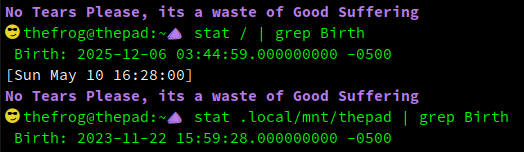
Technically this is the file system date and not the install date. (its assumed one formats during install so technically that would be install date) however you can replace the / with the path of any partiton to find its “birthdate” I learned this a while back when I was searching for a way to tell how old a file system was for some disk I had.
Point taken…I am “assuming” that / is normally formatted during a system install…so, pointing out that at times that date could be wrong is good info. Thank you for the clarification.
{
"type": "disk",
"key": "├ OS AGE ",
“folders”: “/”, // Check root filesystem
“format”: “{create-time:10} [{days} days]” // Show creation time and age in days
},