Thee are the words I’ve been trying to arrange in my head.
Tyvm.
What he said.
He pioneered the technology that powers modern AI, and now he is sounding the alarm.
Geoffrey Hinton, often called the “Godfather of AI,” explains why artificial intelligence is accelerating out of control, why governments and companies cannot slow it down, and what the rise of superintelligence means for jobs, inequality, and the future of humanity.
Hinton reveals why AI may replace nearly all forms of intellectual work, how it could surpass human intelligence within decades, and why digital systems already have advantages humans can never match. He also warns of the risks to democracy, the dangers of wealth inequality, and the haunting possibility that AI could one day decide it no longer needs us.
This is FASCINATING.
How would a world with just AIs and no humans look like when it has come to the point that they can reproduce themselves and don’t need them anymore to maintain the power plants?
I mean what would they do? Do they go out for a beer after work?
Will they be keeping around some humans in Zoos, for fun?
I’d rather go back to MS-DOS than to some AI slop.
endeavourOS 2.0 
Human beings evolve from personal experiences, from reaching their limitations, understanding the root of those limitations, and struggling to expand their consciousness. It means that, regarding evolution of humanity, the PROCESS (the experience) is at long term more important than the immediate result.
By having AI offering you the result whithout you struggling to find it, you miss what really matters.
To quote an ancient Indian book, (The Bhagavad Gita) : “We have right to the action,the right action, but not to the fruits of the action”.
But I bet it depends of what should be the aim of life for each of us: struggle and evolution, or comfort in the “matrix cave of illusions¨
Why do you draw the line at AI? I am assuming that you are OK with all the other technological advancements that made our lives so much easier like running water, electricity, fossil fuels, electric cars, computers, smart phones, “calculators”…
You are OK with all these and a lot more, taking away the grit and grind from the human experience, but you draw the line at AI. Why?
And out of context, i do not object getting wisdom from ancient religious texts. I agree that they contain some very good advice. However, they also contain some very bad advice. How do you choose? How should we choose? What shall we do when people choose and practice the latter, which i would say are probably the majority of the people living on earth.
The problem isn’t AI itself, AI can be quite useful. The problem is the blind faith we are supposed to have in it.
With all respect to the Gita, in reality, with no fruits in mind/sight, I am afraid not many a persons would take any actions at all. Let alone the “right action” 
But don’t mind me, I’m a cynic 
as @MyNameIsRichard said the problem isnt ai itself as it can be quite useful.
and i also agree with @pierrep56 .
yes, technological advancements can make our lives easier, but we should be careful to not become lazy. as in, if we drive we dont excercise. people become lazy and use their car for a distance they could have walked within not even 10 minutes. result we have many overweight people or with low stamina. shure long distances became way easier to manage but what is the other side of the coin?
similar things happened with other technology, be it phones wich helped us communicate when we are not together, yet we forgot how to talk with each other in person. or the internet, source of all information we can have, yet it got polluted with, well… things that arent that great, and now goverments want to restrict access to it.
so yes, as it is, ai will make our lives easier very likely, but it will have a price.
be it that we become dumb because we wont think for ourself anymore, or that it becomes a weapon of mass manipulation (like the internet maybe?), time will tell.
i may use it to teach me stuff in the future once it gets a bit better (already good at it but sometimes it gets stuff wrong),… maybe, but i likely dont use it to give me answers directly, unless emergancy.
There has been an observable decline in the IQ during the past several decades. There are many papers written on the subject.
This in unlikely related to the recent rise to the prominence of AI.
Perhaps, if we still are intelligent enough, we could make AI to work to our advantage to make up for our own natural dumbness.
But don’t mind me, I’m a cynic
We just need to treat the results with a healthy amount of scepticism and verify as we would any other medium.
Large Language models can decode and mimic human languages, be it written and/or oral. These are the ones that the scare mongering is going on about in social media circles because we associate speech with human intelligence. When some machine talks, we think of it as an independent thinking entity. It is understandable, but false. Understandable because we have this instinctive yearning for reaching out, exploring the unknown and meeting/communicating with others. That is why most of us want to meet with aliens. We as humans can associate completely irrelevant variables and combine them to create/discover something extraordinary. Aristarchus of Samos did that. Isaac Newton did that. Albert Einstein did that. I don’t believe any AI can do such a thing. They can however tell you who Aristarchus of Samos was 
AI is not new. There are AI models out there, which are decades old. Their capabilities were focused to simpler tasks, for example “playing chess” (1957, IBM), or playing poker (early 2000s). Making this focused programs were easier and computing power required was much lower. We can make “talking machines” today because we have reached that level of computing power and also found ways to compartmentalize human speech in software.
About the fear of “diminishing human experience because of AI”. I would say, forget the languange models. We have had calculators for hundreds of years, are we seeing a decline in mathematical “endeavours”? (hehe). No. We have AI models today that can beat every chess master out there. Are we seeing chess being abandoned? No. I actually think there are more people playing chess today compared to 100 years ago. There are lots of youtube channels about chess and there is that scandinavian guy who is literally a superstar (forgot his name).
So in summary, AI will not replace our frail brains because it is not an equivalent replacement. It is just a partial emulator.
If you are to be scared of something, i suggest you to be scared of AI doing this:

Well I’m a person that can’t easily change things, that I’ve become used to.
So my current decision still revolves around this kind of operating system upgrade for multiple years now:
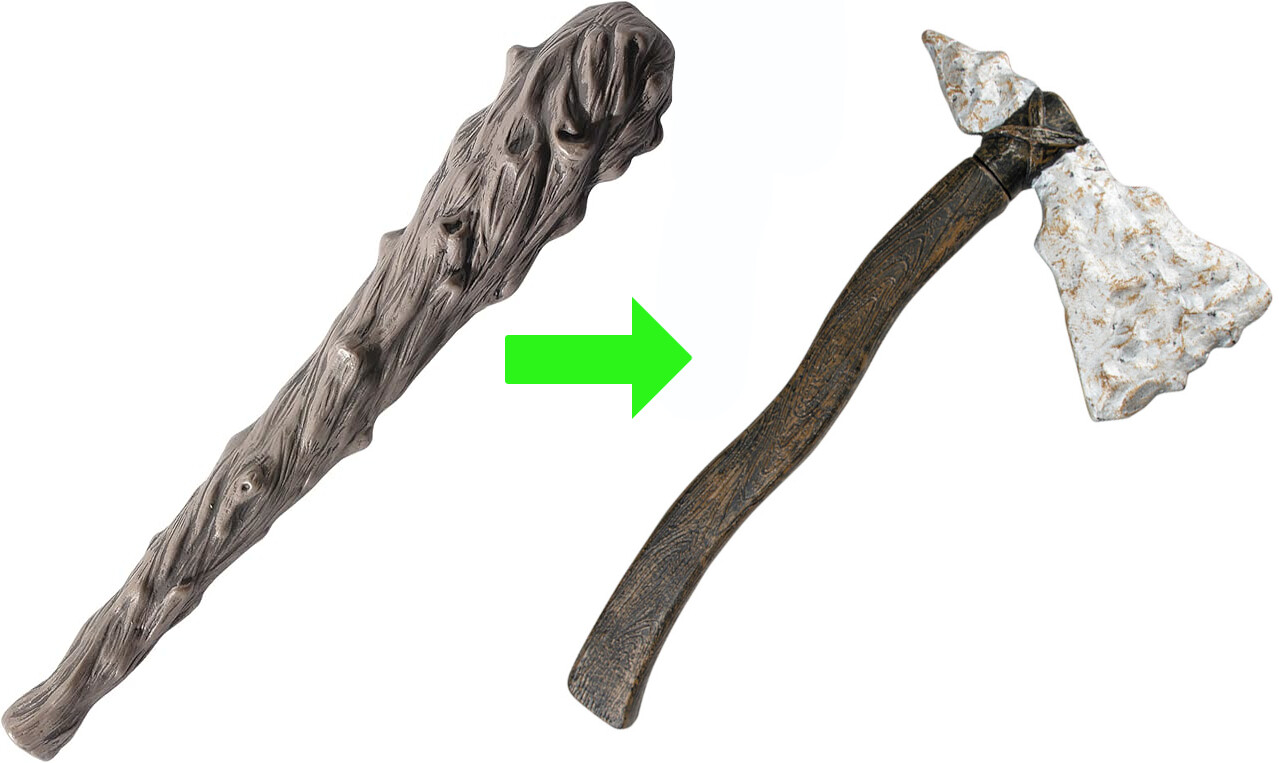
Last time things went from this:

to this:
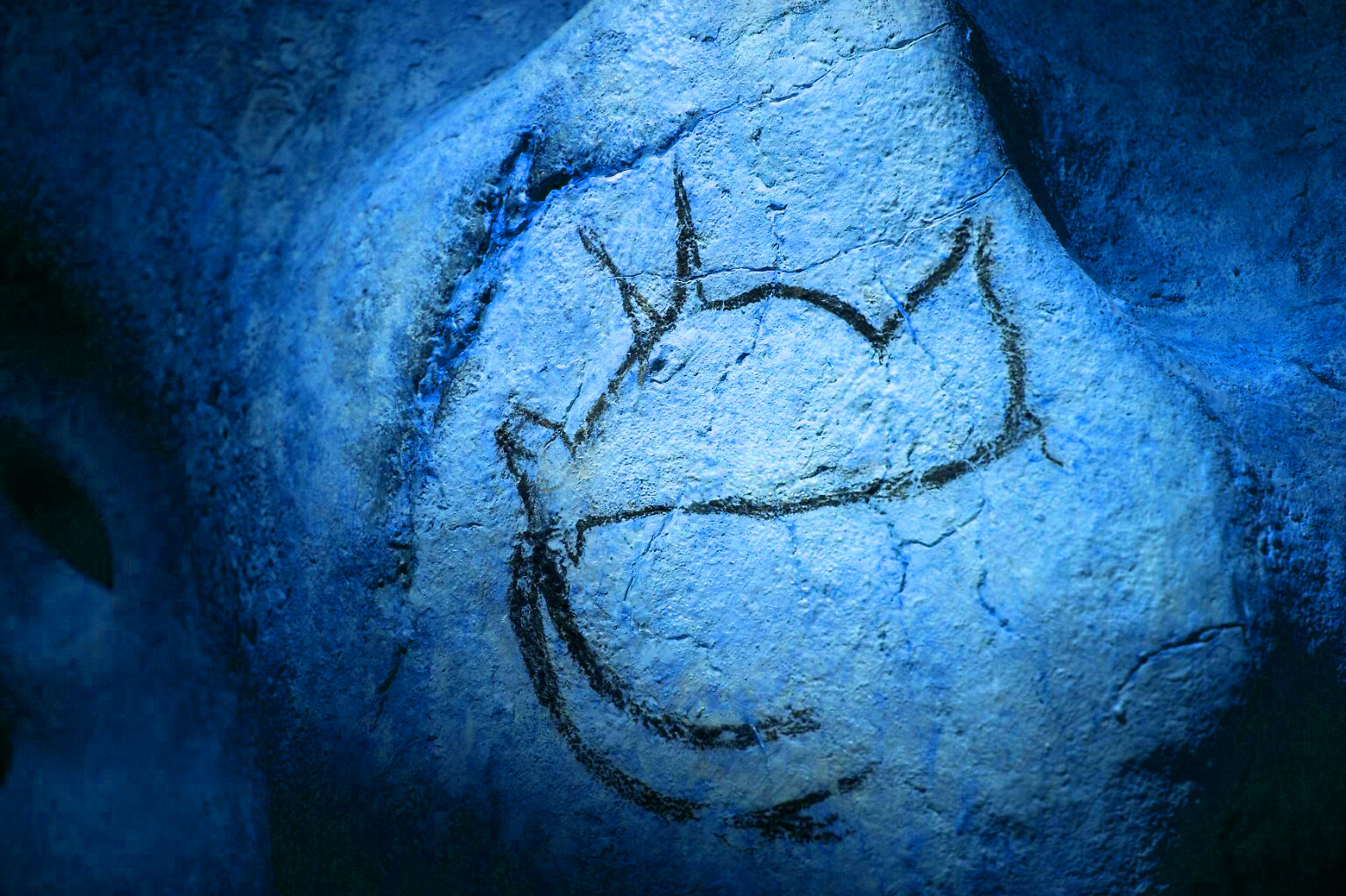
So I’m kinda afraid of upgrading.
—————–
Or more seriously - I don’t like technology that claims to help me in my day to day life, while causing trouble every day. And in the background continues to work on destroying my life.
That’s how I feel about computers, smart phones, cars… so, yeah… I hear you.
I wouldn’t mind that part of my frail brain be replaced by some open source and privacy respecting AI in those areas that AI has undeniably surpassed already any single human’s frail cognitive capability 
Perhaps because NOTHING except maybe the splitting of the atom has come close at being as problematic as AI can be.
Category Estimated Total Deaths Time Period Main Sources of Deaths Notes Wars 200–250 million 1800–2025 Combat, civilian casualties, and indirect (e.g., disease in camps); major events include Napoleonic Wars (~5M), Taiping Rebellion (~30M), WWI (~20M), WWII (~80M), and post-1945 conflicts (~20M). Dominates due to scale of 20th-century industrialized warfare; ~187M from 1900 alone, plus ~40M in 19th century. Excludes pre-1800. Malnutrition 140–200 million 1800–2025 Acute famines (e.g., Irish Potato Famine ~1M, Bengal 1943 ~3M, Great Chinese Famine ~30M) and chronic undernutrition/starvation. Focuses on excess deaths; ~140M from major famines since 1875 per historical analyses, with earlier 19th-century events adding ~20–40M. Broader under-5 child deaths add to upper range. Petrol Engine Cars 60–80 million ~1890–2025 Road crashes (~50–60M direct) and air pollution/health impacts (~10–20M premature deaths from emissions). Pre-1890 negligible; annual rate ~500k–600k in recent decades, cumulative extrapolated from WHO/OWID data. Includes all automobility harms. Corrupt Politicians and Their Actions 20–50 million 1800–2025 Policy-induced famines/mismanagement (e.g., Holodomor ~4M, certain colonial-era shortages), graft-related neglect, and indirect via embezzlement-fueled instability. Highly indirect and debated; no consensus total, but attributes ~20–30% of some famines/wars to corruption (e.g., Gilded Age scandals, modern kleptocracies). Upper end includes broader governance failures. Pets 5–15 million 1800–2025 Dog/cat bites, rabies transmissions (~59k/year globally today), and attacks; historical rabies epidemics higher. Mainly dogs (~60–80k/year average); cats negligible. Pre-1900 rates elevated due to poor vaccination, but global pet ownership scaled up post-WWII. US data shows ~40–100/year for scale. Wild Animal Attacks 1–2 million 1800–2025 Non-venomous assaults by large mammals/reptiles (e.g., crocodiles ~1k/year, elephants/hippos ~500/year, big cats/sharks <100/year). Annual global ~5–10k (excluding insects/snakes); steady rate over time, concentrated in rural/wilderness areas. Lower in modern eras due to habitat loss/encroachment. Nuclear Fission ~300,000–500,000 1945–2025 Atomic bombings (~210k immediate + ~100k long-term cancers), Chernobyl (~4–9k), other accidents/testing (~10–50k). Pre-1945 zero; nuclear power itself <100 direct deaths. Conservative; some studies inflate long-term via fallout. Artificial Intelligence <1,000 ~2000–2025 Industrial robot accidents, self-driving car crashes, and indirect (e.g., data center pollution projected ~1.3k/year by 2030). Extremely low so far; mostly US/EU cases (~few hundred). Existential risks hypothetical, not included. Pre-2000 negligible.