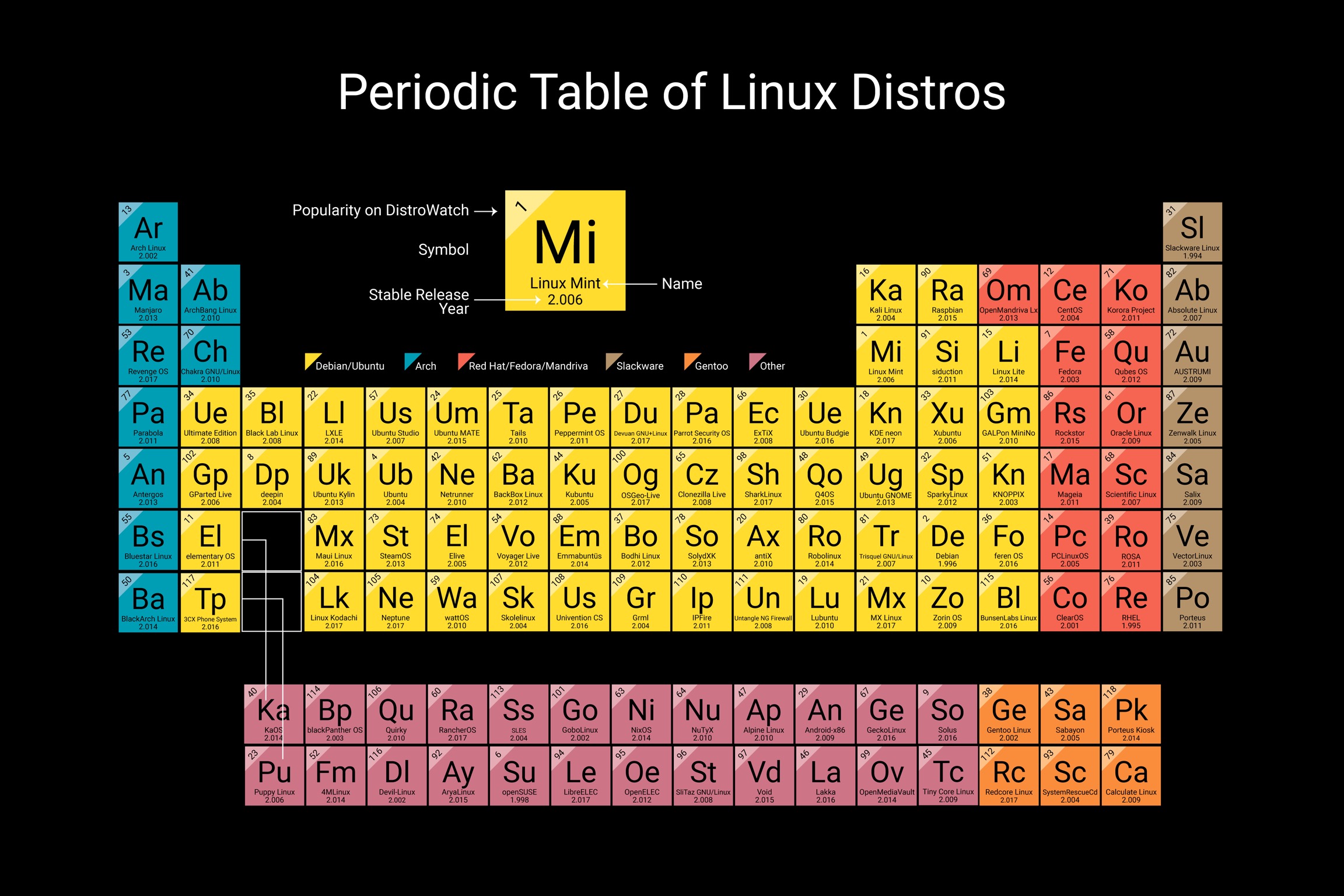
The wide range in estimates comes down to how you count — some distros are just minor tweaks of a parent distro, others are full independent projects. The Linux ecosystem is also constantly shifting, with new distros being created and old ones being abandoned all the time.
The most popular ones by far are Ubuntu, Debian, Fedora, Linux Mint, Arch Linux, and Red Hat Enterprise Linux, but the long tail of specialized distros is enormous — covering everything from security/penetration testing (Kali Linux) to privacy-focused systems, retro gaming, education, and embedded devices.
I am still a little puzzled whether “atomic” or “immutable” are the same. The relationship is: atomic implies immutable, but immutable doesn’t imply atomic
Immutable Linux refers to a system where the root filesystem is read-only at runtime. You can’t just apt install something and have it stick. The goal is stability and security — if the OS files can’t be changed, malware and misconfigurations have a harder time persisting. Examples include older approaches like read-only root mounts with overlayfs.
Atomic Linux takes that further by adding the idea of transactional updates. Changes to the OS are applied as a whole unit (atomically) — either the entire update succeeds and you boot into the new state, or it doesn’t apply at all. There’s no half-updated system
I never knew there was a difference between Immutable and Atomic. I was always led to believe they were one and the same, i.e. immutable by necessity = transactional (atomic). I guess I wasn’t paying attention that closely as sometimes happens
Niches might explain Hannah Montana distros and the like. I can’t say if that’s positive or negative if it leads people the foss way. BSD is too difficult for me. I’ve been trying to enjoy MUSL distros for three years now–I love Adelie and Alpine— but find them limiting. And I have little proprietary in my Linux life. MUSL or BSD is a divide I cant cross yet. EDIT: But I will.
The sheer volume of derivatives is a plus, and a sign of its ubiquity. Literally running everything from a Raspberry Pi to the ISS, to CERN and Weta Digital. I think we’re going to see a rise in immutable releases over the coming years, but at the same time, I there will always be a place for those of us who just want to dig into everything at every level, without guardrails.
Could be 1000 in a year….I think the simple, unified representative Linux desktop people have been predicting for years will be likely impossible. in the meantime the big 3 won’t go anywhere: deb, fed, arch and the other 90% will be a playground
Usually when I visit DistroWatch, there’s usually at least one update to at least one distro that I have never heard before. I have come to conclusion that they are someone’s answer to something that they felt was not available on any current distro. Sometimes I wonder how many of those “die” before they even get to blossom and how many come to be on the meantime.
Probably true, though it would be nice to see maybe 100 distros as the cap, i won’t deny anyone their vision!
Does anyone really remember who did the first atomic/immutable? (I don’t and was curious) I am asking because that seems the last big innovation in the sphere.
fedora, probably, officially but I have a hunch some distro conceived it first but couldn’t dial it in all the way so abandoned it. (guess–it sounds pretty linuxy)
Impressive score, but let’s bear in mind that maybe 7 of them are core distros, 20-30 are based on something but serve a specific purpose and the rest are just respins of their bases with a few minor tweaks (different app suite and theming), but not enough for a separate distribution.
I think I’d prefer too many than not enough. With too many, you can just ignore those that you’re not interested in, even if as @ricklinux says, that rules out 99.9983% of distros
With not enough, odds are you need to settle for something.
Linux “suffers” from too many.
BSD “suffers” from not enough.
and all the other labels Jessie has over there to label what I call the non-canonical distros.
And OP never says where he or she got the 600 number….
To go back to Jessie he counts linux-based operations like telnet/telemarketing programs as distros however specialized they are. USB-only rescue GUIs also counted as distros
To go back to OP: who counted the 600 and what were there criteria? Is someone counting BSD? Etc.
Seems all milky and muddy when I think about that number


 I’m in this club too