War and Peace by Leo Tolstyo is an awesome piece. I did not know that Russia has had such a rich heritage in literature.
I did not know how much of this book is factually accurate, but is amazing to see that Russians used to believe that Czar was appointed by god and was god’s rep on the planet. Whose word could not be questioned or challenged. Also it comes out how Russians used to see themselves as protectors of Christianity.
It is amazing how come a country which was so deeply religious converted by end of 1918 and that too within a year, into an absolute atheist, which became super hostile to religion. What a turn around. I wonder how Leo Tolstoy would have reacted to such a turn of events.
So looking at two books as my next read. One is Anna Karenina by Leo Tolstoy
The other option is And Quite Flows The Don by Mikhail Sholokhov.

Like many things in Soviet Russia, this was more complex than a one-year conversion. If you want to read a phenomenal book on the early to mid-Soviet era, may I recommend Alexsandr Solzhenitsyn’s The Gulag Archipelago? The unrelenting drumbeat of state-sanctioned murder of its citizens is horrifying, then numbing, then – just numbers. It helps give insight into the soul of the Soviet people.
BTW, not a former Soviet or Russian citizen. I’ve never lived there. But the early-to-mid 80s were a fascinating time and so I took a bunch of classes and read a lot of books.
One joke I recall from that time: The Soviet Constitution guarantees freedom of speech. The problem is freedom after speech.
Having some extra reading time these days.
Just finished
A light read - not earth shattering, but giving some thorough insight, I think, into social patterns in the 19th century.
but is amazing to see that Russians used to believe that Czar was appointed by god and was god’s rep on the planet.
That’s how all monarchies have worked for thousands of years, since the first city-states. Be it a pharaoh when the last dwarf mammoths still roamed the earth, Greek polis kings, dictators, or Roman emperors before the Christian tradition came into existence and after it too.
The source of power is justified as divine, and the one who wields it is God’s representative - or a god himself. Even the U.S. Declaration of Independence justifies itself through divine authority.
It opens by appealing to “the Laws of Nature and of Nature’s God,” then asserts that all men “are endowed by their Creator with certain unalienable Rights.” Toward the end, the signers appeal “to the Supreme Judge of the world for the rectitude of our intentions,” and close with “a firm reliance on the protection of divine Providence.”.
The Constitution is more secular, but still speaks of securing “the Blessings of Liberty” and uses the verb “ordain” - words borrowed from the vocabulary of the church. And Article VII dates the document “in the Year of our Lord.”
It didn’t happen within a year. The active phase of the civil war lasted up to 1923, with loyalist military still involved. Massive civilian riots kept happening into the 30s.
All the while, ethnic and religious cleansings were being carried out against the Russian Orthodox, and being openly Orthodox was pretty much a death sentence. This lasted until WWII, when the Bolsheviks clinging for survival allowed Russians to practice religion more freely for the sake of boosting morale in the face of a highly possible existential defeat.
your contexts are interesting.
Journalist Hunter S. Thompson poached that and would insert into his work he was reporting “from this Foul Year of Our Lord, 1990” or whatever. I soooooo stole that and use it all the time. Every year fits 
A professor for an honors class said sort of the same thing : “Everyone has freedom of speech, the issue is what freedom after speech is like.”
James, Gareth, Daniela Witten, Trevor Hastie, Robert Tibshirani, and Jonathan E. Taylor. 2023. An Introduction to Statistical Learning: With Applications in Python. Cham: Springer. https://drive.usercontent.google.com/download?id=1ajFkHO6zjrdGNqhqW1jKBZdiNGh_8YQ1&export=download (April 17, 2026).

‘Errata - ISL with Python’. An Introduction to Statistical Learning. https://www.statlearning.com/errata-python-edition (April 17, 2026).
The preface of this book talks about the Elements of Statistical Learning (ESL, by Hastie, Tibshirani, and Friedman) as follows
What is meant by advanced training in the mathematical sciences?
Thanks for the book, was on lookout for a book about Statistical learning.
Being comfortable with numbers, variables, and datasets. No handholding, the book works with formula, while practical (video) courses would show actual data tables and explain the columns variables one by one, the book skips that and assumes you know that subscript i and j refer to rows and columns etc.
Some of my triple-A and triple-B books and articles.

I read this about 13 years ago, the book explains the idea of a confidence interval (90% CI) very well. It made me understand probability, statistics in the sciences, and … gambling.

Also 12 years ago, the workbook instructs how to use phone cameras, paper, and scissors to invent and imagine new software for phones, tablets, and computers. Very handy.
Right-brain thinking gets sold down the river even by the academy. This ^^^ is awesome. EDIT: and so necessary

There is now a 6th edition (2024).
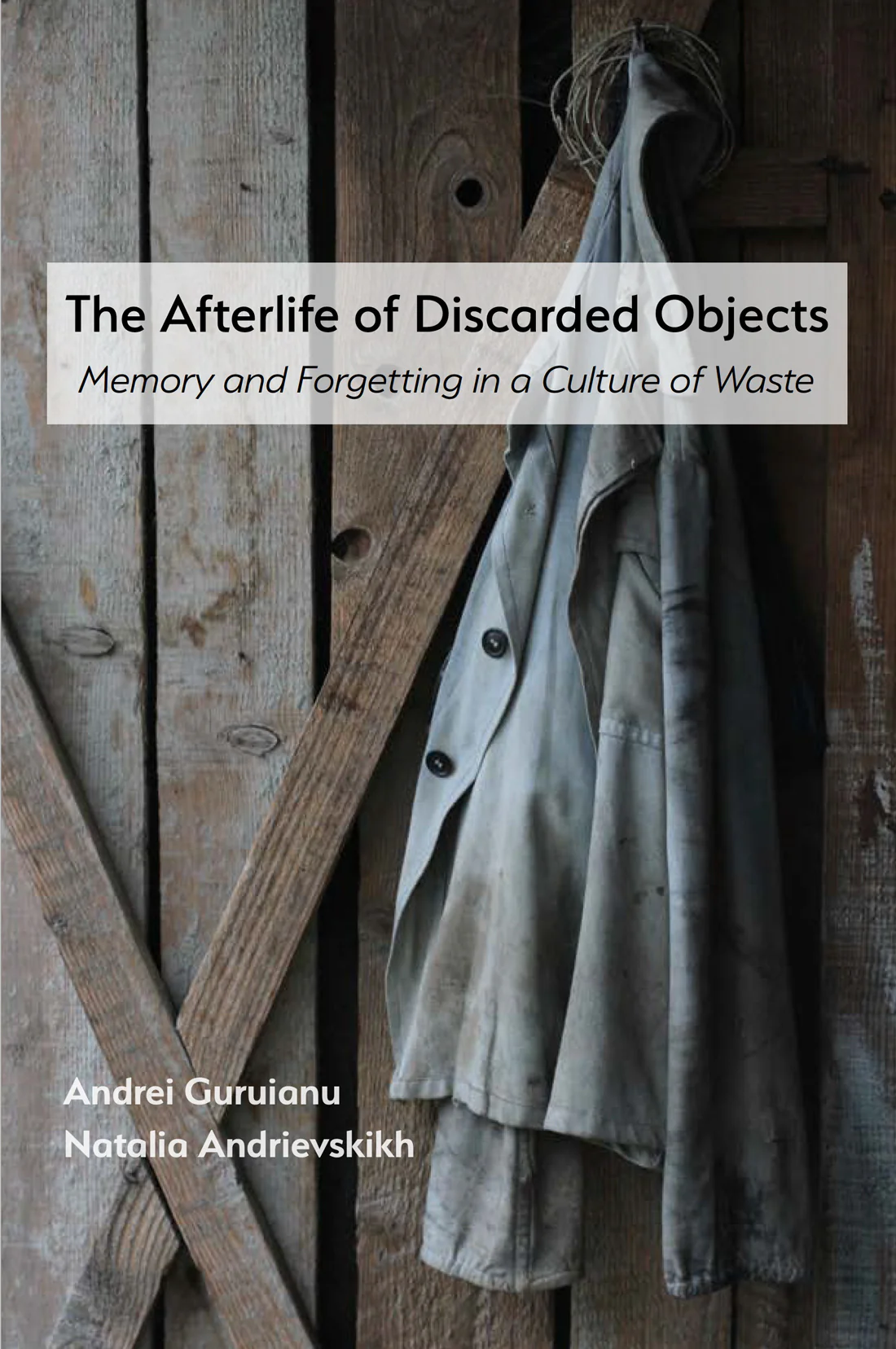
this is fascinating. a couple chapters in. laid out like a textbook, written intelligently and anecdotally. Rumanian authors from NYU. 4CP–printing parlance for four color process. It’s about our relationship to a multitude of discarded items continuously in our lives from monuments to paperwork to trash and all in-between (author’s lives especially).
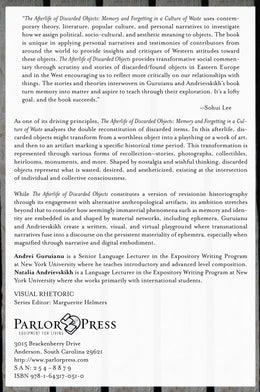
If you notice the back cover, near the bottom, it’s categorized as “visual rhetoric”, which it kind of is, and makes it way cool, but the writing isn’t always focused on the pictures, per se, so it seems to take on a life of its own outside the “categorization.”
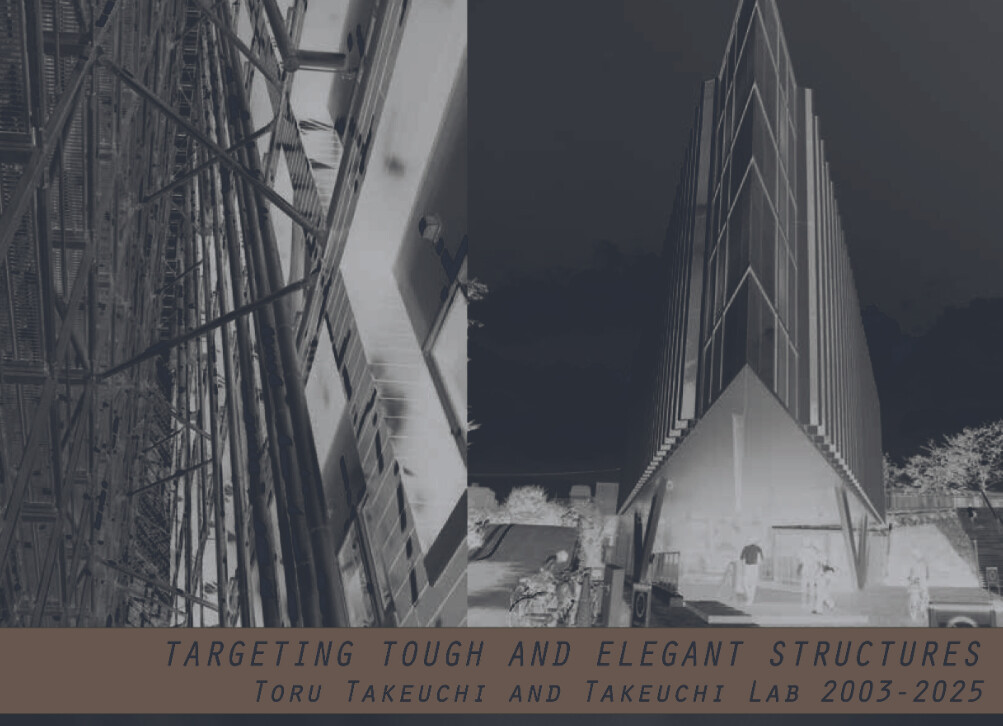
free download (200+ MB)
Takeuchi, Toru. Targeting Tough & Elegant Structurtes. 0622 本. 2025-03. https://toru-takeuchi.com/ebook/Targeting%20Tough%20&%20Elegant%20Structurtes%20202503公開版0622.pdf.
Online course
ScienceTokyo: Japanese Architecture and Structural Design, ARCH301x. 指導 Toru Takeuchi, 2021, https://courses.edx.org/courses/course-v1:ScienceTokyo+ARCH301x+1T2026/course/updates.
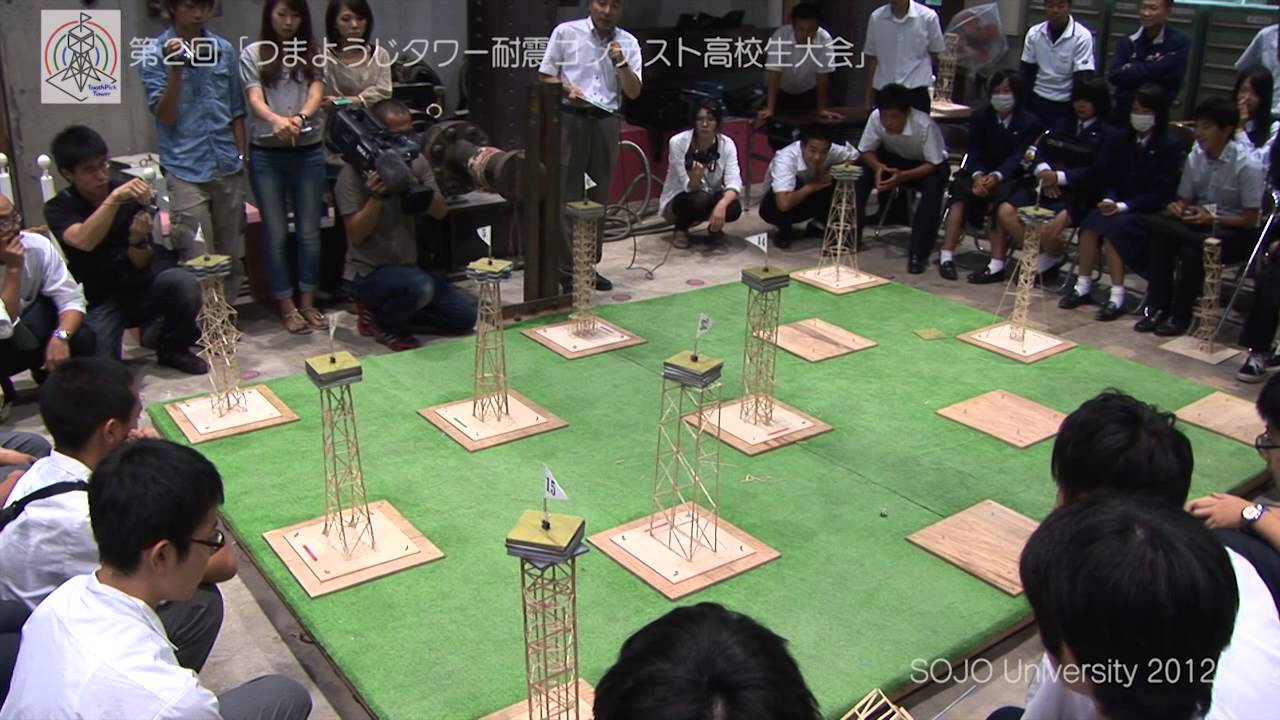
1101yasuhiro. 第2回「つまようじタワー耐震コンテスト高校生大会」. 2013. YouTube,
———. Toothpick Tower Earthquake-resistant Competition 2010. 2022. YouTube,
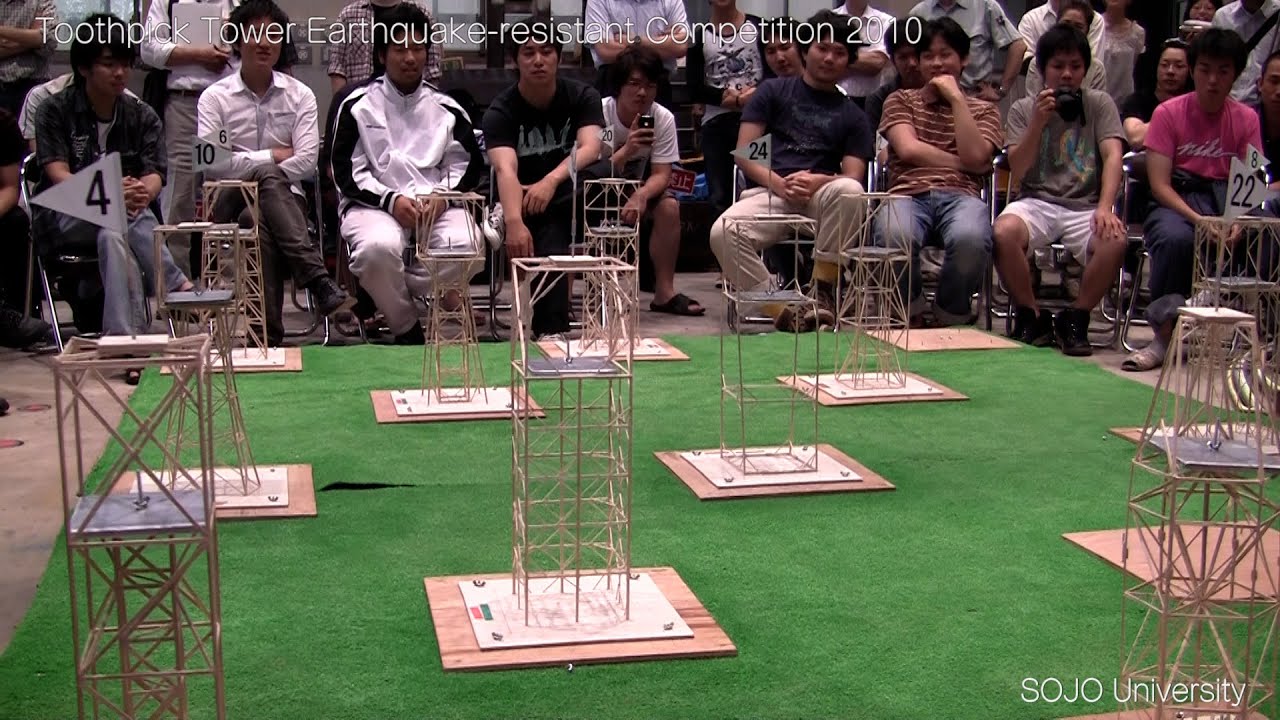
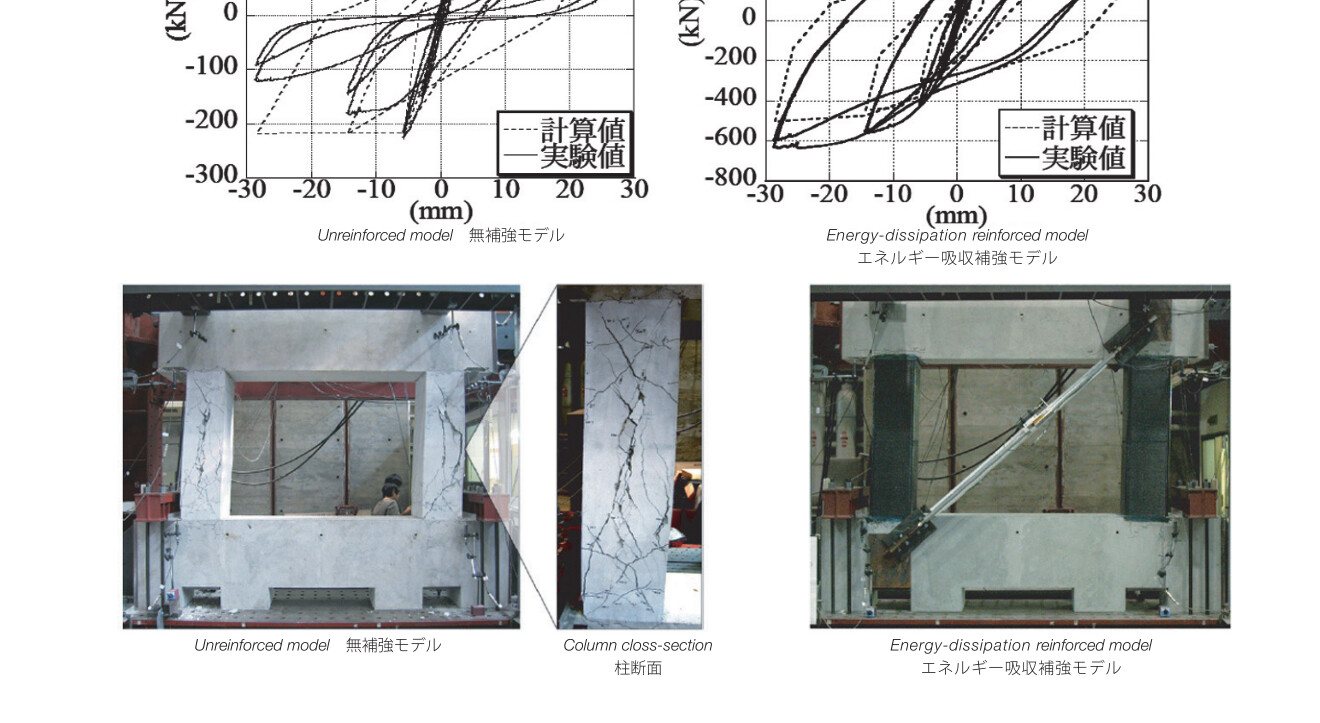
pg 64 and beyond are fascinating. He has some big-ass warehouses at his university or private practice. This is the testing done to see if their or any other architect’s engineering can withstand natural and man-made disasters. (stress fractures etc). According to him this is what he does with his grad students 

Love the off-the-beaten-path niche engineering stuff. Nice find
I have seen these big-ass warehouses in tours that my school conducts. How are the cow webs and other dirt items cleaned? No vacuum is going to reach so high. And then if a LED goes kaput, the effort required to replace it…