My college was another story - my major was Chemistry, but someone there fat-fingered it to add a second major in Chinese to my record. I kept getting brochures for Chinese stuff, and I knew who to blame!
2 Likes
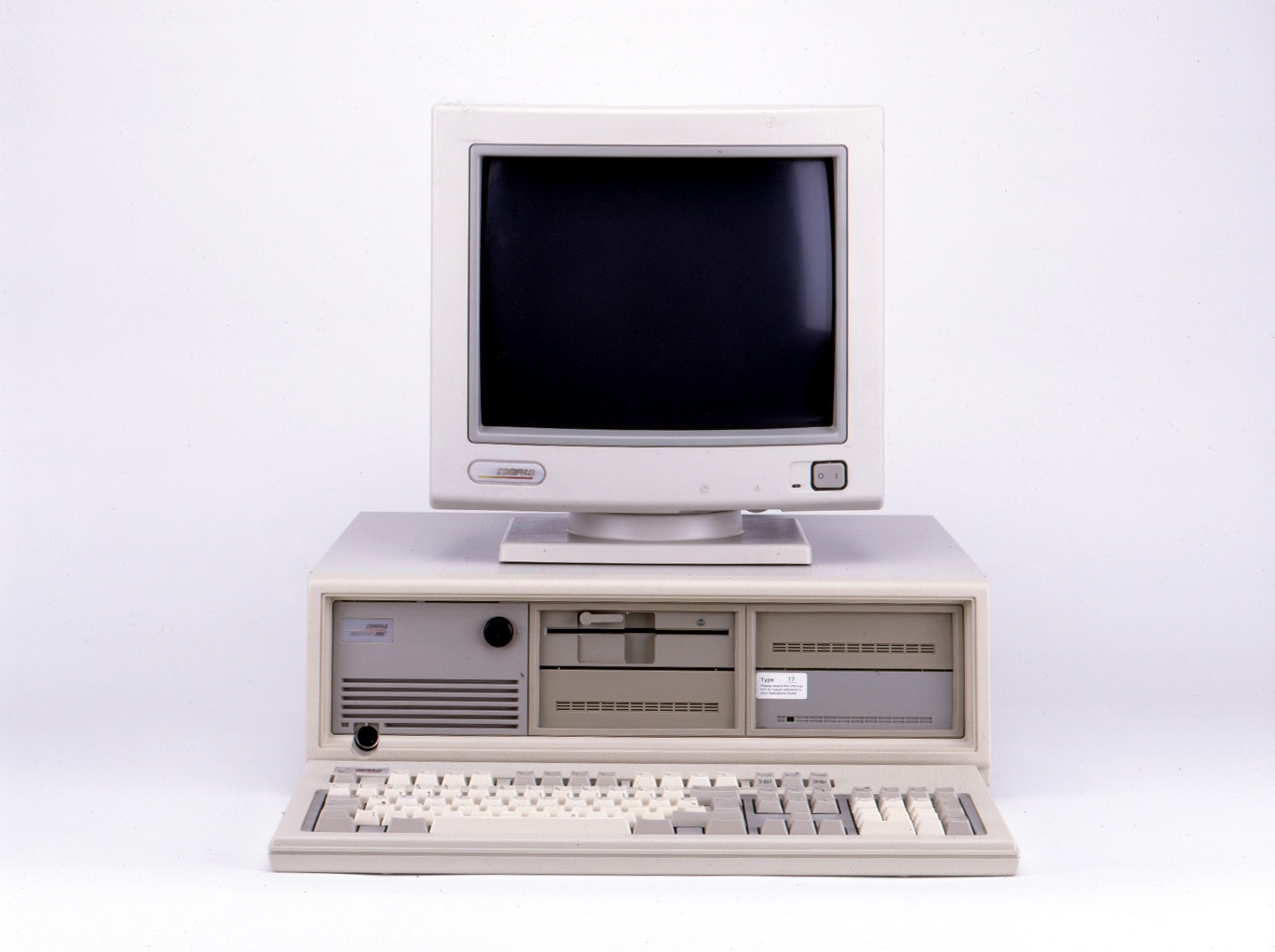
Well, this used to be the fastest computer in the school. It needs a floppy to boot up and has 128 or 256K ram, no hard drive installed.
4 Likes
Not a machine that I or my family members owned, but the hard drive of this PC ( Schneider PC or EuroPC) had to be put into a parking position explicitly by specific software before it could be turned off. Which was a bit weird, because even the 8086 my father used to have pretty early on for his profession (1984 or so) didn’t required this.

For myself, as I’m a child of the early 80s…
I really spend more money that I should have on such things as a Diamond Monster3D graphics accelerator card.

And can you recall what you’ve had to pay for your Machines back in the day ?
I can recall that I’ve paid 400,- DM for my very first VGA Monitor. CRT 14,1" in 1991 or 1992. And that has been a used one from a friend of the family. Nowadays that would equate to $425.00 nowadays. My first own monitor that I had previously was a gift to me (together with a 386 DX40), only CGA.
3 Likes
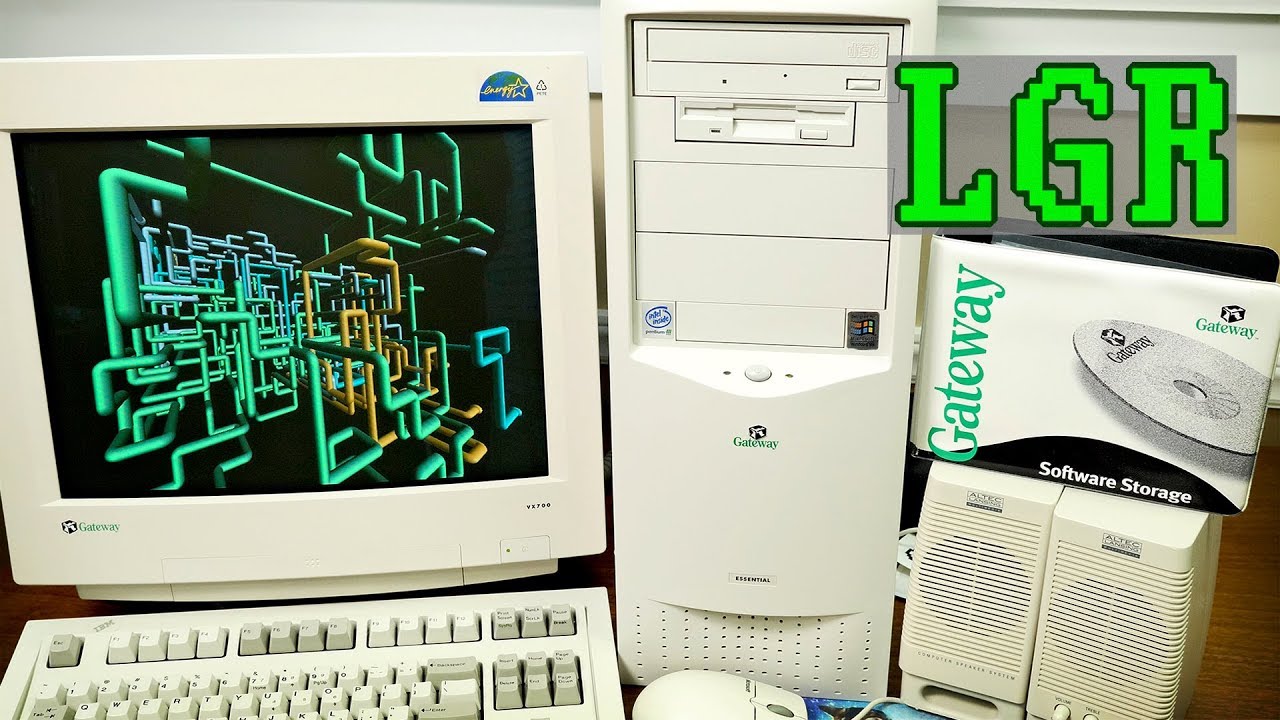
I love watching vintage tech videos on YouTube. This one caught my eye because it is the EXACT Gateway Essential 450 PC from 1999 I had back in the day. This was the first PC I bought for myself replacing my 1995 HP pavilion 5030 (which I received as a Christmas gift in '96). Cool video, too…
2 Likes
Ah, and one more thing.

An HP Laserjet 6P. Still in use here, It’s toner cartridge is at least 15 years old. No issues, totally reliable. Definitely the oldest piece of tech I’ve got in use, almost 30 years old.
5 Likes

I had somewhat similar setup. It was my first touch with the computers and although at the near end of 1990’s it was already obsolete it was first computer I used printing my one of my first home-assingments with this:

Those were the days. 
5 Likes
My father-in-law had one of those, frickin’ weighted a metric ton. I can remember playing a side-scroller game where you had to jump between different levels, that is until I stepped on the 8" floppy.
2 Likes
Man this thread is cool, the stories are cool/semi-relatable (I grew up in the 90s in an area that was pretty poor, a lot of our tech was outdated or broken but we always made it do something - not always useful)
4 Likes
@1093i3511 Wow, the Schneider Euro PC was my dream machine back then. I’d still really like one but can’t find one for sale.
The first machine I used at school was a Research Machines RM380z (love the Zilog Z80 processor and later designed and made custom motherboards for medical applications using it. It has a shadow registry set so you can just flip to a whole set shadow registers which leads to some very interesting and clever assembly programming).

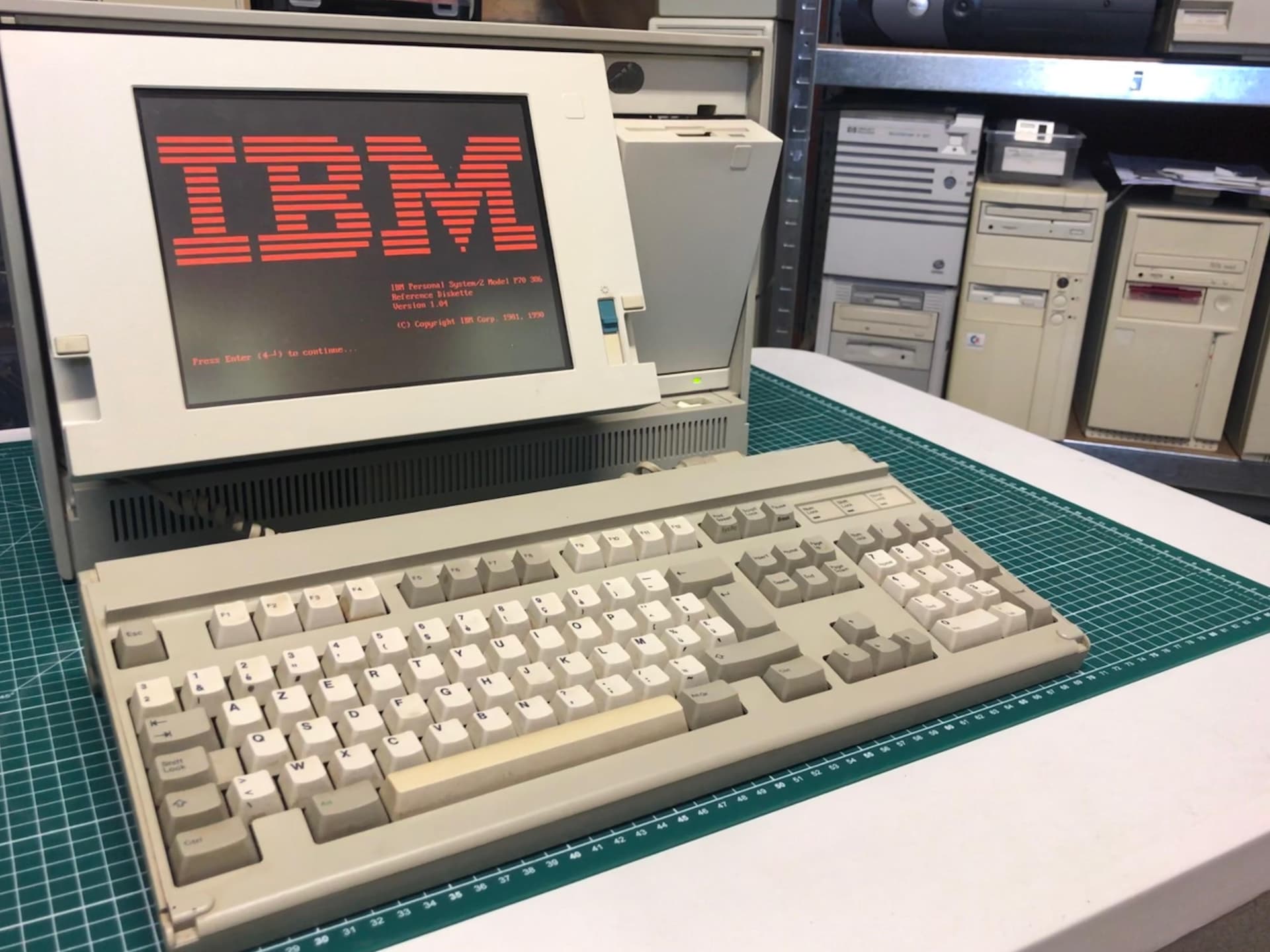
One of my first work machines that I loved was an IBM PS/2 P70 luggable which was mains powered but all folded up like a very heavy and large briefcase. The gas plasma screen was awesome.
6 Likes
As an intern at a computer company i once had to repair a portable pc (no, they were not called ‘laptops’ in those days - you would not want them on your lap either) :

6 Likes
I started back in 94-95 on a IBM 286 that could only run DOS, so I guess that is why I like the terminal so much. My father had a Micron 386/DX that was eventually passed down to me that had Win 3.11 and could play Flight Simulator. My first upgrade was going to Costco and buying 8 more megs of ram so that I could max it out. I think it was 16 or 32?
Funny thing is when I left the Army in 2011 I moved to Virginia and worked for Micron making DDR and Flash memory. I was amazed when my boss did a presentation with a 64G flash chip on his finger and I was thinking my HS computer only had a 12GB hard drive.
He was confused and amazed when I told him that my original computer was made by Micron. He told me they did not make computers. I replied, “You did at one point. We even bought it in Boise, from the same building that is attached to your headquarters.”
1 Like
I must admit I still have my original HP Laserjet II in the cellar—including the “35 Adobe Fonts” cartridge. 
2 Likes
My favorite story from the old days: The background is in the mid 80s I worked as a programmer for a company who provided financial software to financial institutions and we also provided customer support to the bank employees who used the software. The software was written in TurboBasic and ran on IBM PCs running MS-DOS.
A customer calls in because they can’t get the software to do something and seemed generally unresponsive. I have her go through several steps with no apparent success.
Me: “Well, this is really strange. Alright, let’s try this: Press the control key and the ‘c’ key; then tell me what happens.”
Customer: (silence)
Me: “Are you still there?”
Customer: “Yes”
Me: “So, what happened?”
Customer: “Nothing”
Me (knowing this should have ab-ended the program and brought up the DOS prompt), “Nothing? The screen didn’t change? Did you press the control and ‘c’ keys?”
Customer: “Yes”
Me: “Wow, that’s really strange.”
While I’m thinking through what we’ve tried and how the program wouldn’t even die with Ctrl-C, the customer speaks up.
Customer: “Should I let up on the keys now?”
Me, holding back my exasperation: “Yes, let up on the keys.”
Customer: “Oh, now I see this text on the screen!” (The MS-DOS prompt)
It was only with great fortitude that I restrained from telling the customer to box up the computer and send it back.
3 Likes
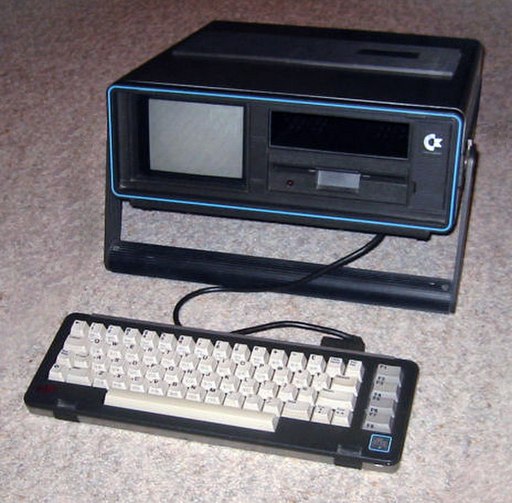
We referred to them as “luggables”.  I had an SX-64; I really wish I’d held onto that. It would be a great retro computer.
2 Likes
I know I paid ~$300 for my VIC-20 and ~$800 for my SX-64. Next, I purchased the components and built my own AT-PC with 640K, a grey-scale monitor (oooohh) and a whopping 60MB hard drive (aaahh) for $1,800.
Nowadays, one FLAC song can be larger than 64MB! 
1 Like
One job I had in junior high school (a friend of the family gave me a part time job in his college computer lab one summer), around 1982, was programming in BASIC on an Apple IIE that interfaced with a top-loading VCR to control the position and playback of the educational tape and then would then ask multiple choice questions on the computer about what the student had just viewed. The software would grade the answers and allow the student to playback the sections of tape if needed based on the quiz performance. I guess I was at the early forefront of computer-based learning systems.
3 Likes
Luggables sounds about right .
1 Like
I remember when we programmed, custom-configured and sold POINT4 Data Corp. systems like the Mark 5 in the end-1970’s/early 1980’s. They had an OS called IRIS, the programming language was a special BASIC variant that had additions for high-performance disk data access.
The main machine was a server rack with many 15x15" PCBs. The CPU alone took 2 boards of 15x15", its microcode was a sealed, pluggable block on one of the boards.
If I rember correctly, the RAM (another 15x15") was 16 KB (8 K words) at that time. A big improvement on the original Data General Nova, which had only 4 KB.
The Lotus 710 disk controller was another 15x15" board that could interface to CDC’s “Lark” drives. These were 8" spinning platter hard drives, 8.35 MB fixed plus 8.35 MB in a removable “pot”—the fixed one had OS and data, the removable one was for backups. After formatting, each had roughly 5 MB of usable space. A “DSP” at that time was the Disk Service Processor…
There was also the Systems Industries “Kahili” disk controller, which is a story for another day. Let me just say it could interface to Storage Module Devices (SMD  like the CDC 9762 with a whopping 80 MB (~67 MB formatted). Five 14" disk platters in a removable pack!
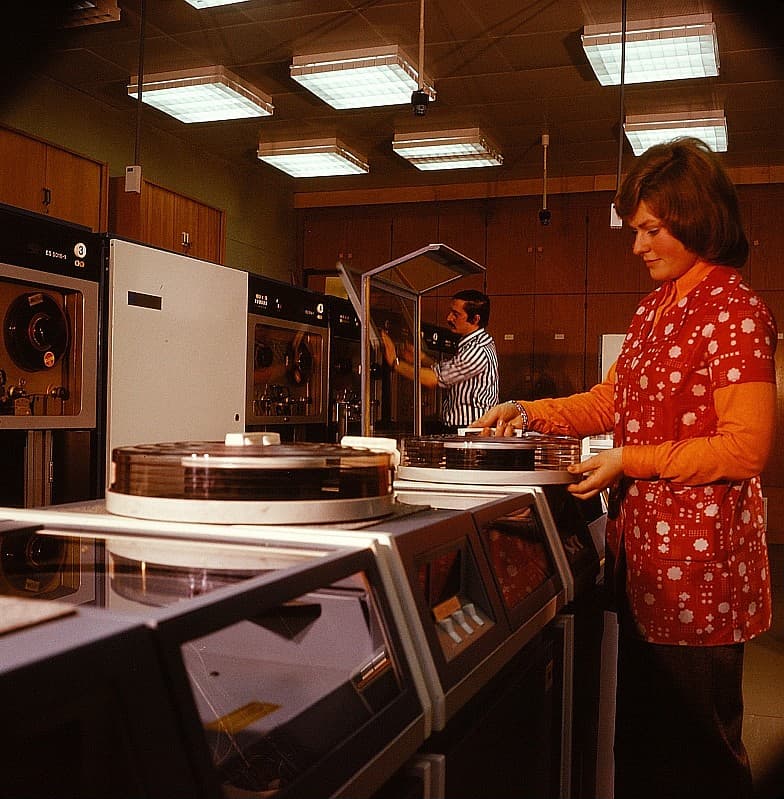
(Image from Wikipedia)
We ran whole companies with that, interfacing 20–30 VT-220 and VT-320 terminals and dot matrix printers via RS-232 serial at 9.600 bps. And it worked!
3 Likes
In those days one needed to know how the system worked and how it interfaced with its peripherals, to be able to make it do what you wanted it to do.
I remember having to peek and poke memory addresses to make a tape start and stop. I also remember writing some machine language function which made it possible to store 2 bytes of data in 1 byte of memory, so that the 16 kb memory was less of a restriction.
1 Like